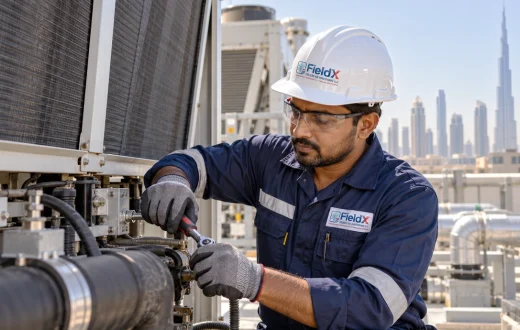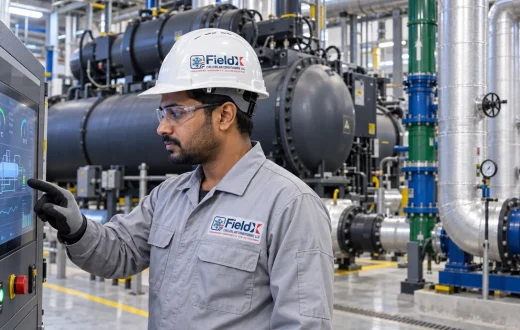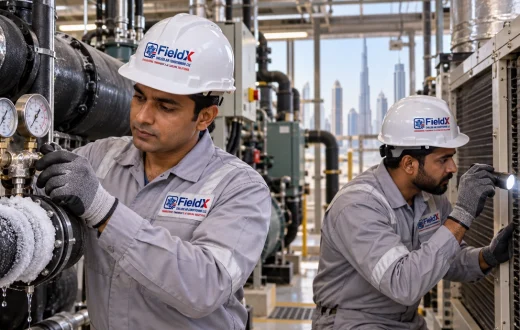
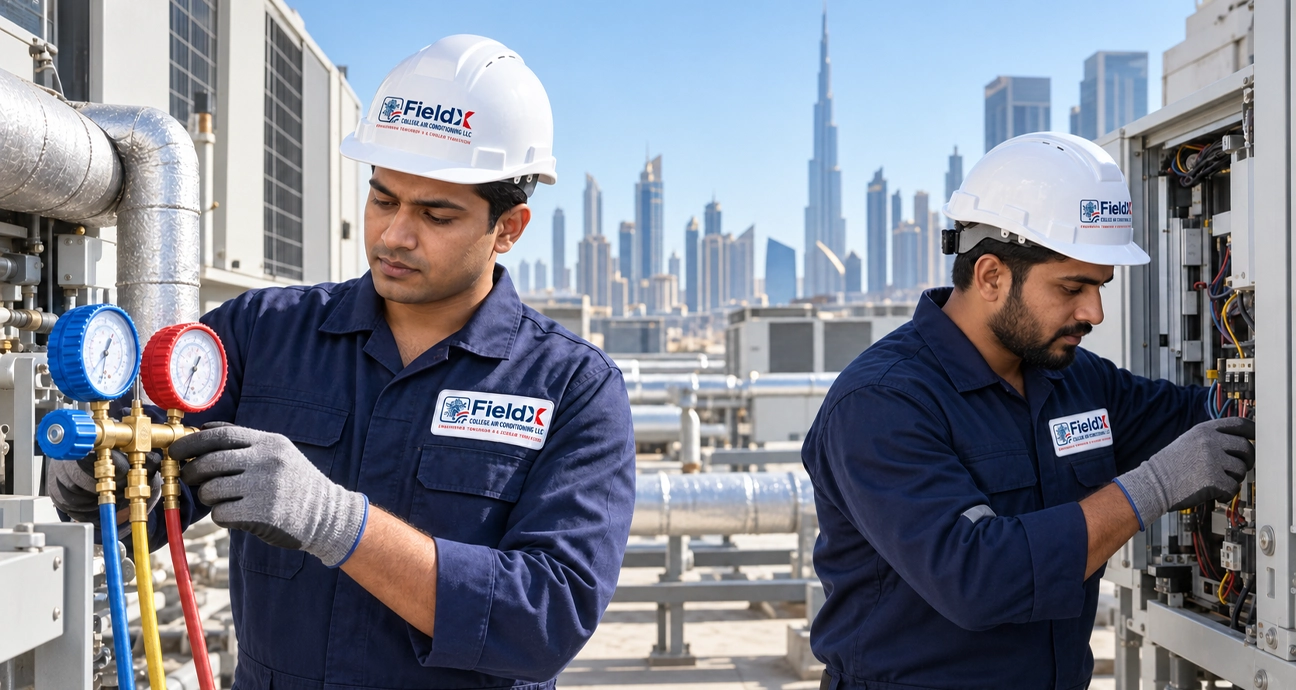
Chillers are essential cooling systems for commercial buildings, hotels, hospitals, shopping centers, industrial facilities, and other large properties across Dubai and the UAE. Because chillers often operate for long hours, especially during the hot summer months, regular servicing is important to maintain reliable cooling and system performance. When a chiller starts showing unusual symptoms, early professional attention can help identify the underlying issue before it develops into a major equipment problem.
A chiller may gradually lose performance without experiencing a complete breakdown. Changes in cooling capacity, unusual sounds, vibration, pressure or temperature readings, water flow, refrigerant conditions, and energy consumption can indicate that the system requires inspection. Regular chiller servicing in Dubai allows technicians to assess these signs, identify potential faults, and recommend appropriate maintenance or repairs.
Professional chiller maintenance is not only about repairing equipment after a failure. It also involves preventive inspection, performance monitoring, cleaning, testing, and system optimization. By identifying problems early, building owners and facility managers can better plan maintenance activities, reduce unexpected downtime, and support the long-term operation of their cooling systems.
1. Reduced Cooling Capacity
One of the most noticeable signs of a chiller problem is reduced cooling performance. If the chiller is running but the building is not reaching the required temperature, there may be an issue with the refrigeration cycle, heat transfer, chilled water flow, compressor performance, or other components.
Possible causes can include:
* Dirty condenser or evaporator tubes
* Reduced chilled water flow
* Refrigerant-related issues
* Compressor performance problems
* Cooling tower inefficiency
* Blocked filters or strainers
* Faulty sensors or controls
A professional inspection can help determine the actual cause instead of simply adjusting the system without addressing the underlying problem.
2. Unusual Compressor Noise
Compressors normally produce operating sounds, but a sudden change in noise can indicate a developing mechanical or operational issue.
Watch for:
* Grinding sounds
* Rattling
* Hissing
* Excessive humming
* Knocking sounds
* Unusual vibration-related noise
Unusual compressor noise should be investigated by a qualified technician because continuing operation with a mechanical problem can potentially lead to more extensive repairs.
3. Excessive Vibration
Excessive vibration is another important warning sign. Chillers contain rotating equipment such as compressors, motors, pumps, and fans. Changes in vibration levels can indicate mechanical imbalance, bearing problems, alignment issues, loose components, or other equipment conditions.
Professional chiller servicing may include vibration analysis to identify abnormal operating conditions and determine whether further inspection is required.
4. Frequent Alarms or Unexpected Shutdowns
If a chiller repeatedly generates alarms or shuts down unexpectedly, it should be professionally inspected.
Common causes may include:
* High or low pressure conditions
* High temperature
* Low chilled water flow
* Sensor problems
* Electrical faults
* Refrigerant issues
* Compressor protection activation
* Control system faults
Repeatedly resetting the chiller without investigating the cause can allow an underlying problem to continue.
5. Increasing Energy Consumption
An increase in electricity consumption can be an indication that a chiller is operating less efficiently than before.
Potential contributing factors include:
* Dirty heat-transfer surfaces
* Poor condenser performance
* Inefficient cooling tower operation
* Compressor issues
* Incorrect operating conditions
* Reduced water flow
* Control system problems
* Aging components
Energy and performance monitoring during professional chiller maintenance can help identify changes in system operation.
6. Abnormal Operating Temperatures
Temperature readings provide important information about chiller performance. Unusual chilled water supply or return temperatures, condenser temperatures, or other operating temperatures may indicate a problem.
Technicians may compare:
* Chilled water entering temperature
* Chilled water leaving temperature
* Condenser water temperatures
* Refrigerant temperatures
* Compressor operating temperatures
* Ambient conditions
These readings can help identify potential performance issues and guide further troubleshooting.
7. Poor Chilled Water Circulation
Insufficient chilled water circulation can affect the cooling performance of an entire facility.
Possible causes include:
* Pump problems
* Blocked strainers
* Air in the chilled water system
* Valve issues
* Improper balancing
* Pipe restrictions
* Water-quality problems
Professional inspection and water-side testing can help identify circulation-related problems.
8. Refrigerant Leak Indications
Refrigerant-related problems can affect the performance of a chiller. If there is a suspected refrigerant leak, unusual pressure readings, or a gradual reduction in cooling performance, professional inspection should be considered.
Chiller technicians can use appropriate testing and leak-detection methods to investigate the system and determine the required corrective action.
9. Dirty Condenser or Evaporator Tubes
Heat-transfer tubes play an important role in chiller efficiency. Scale, fouling, deposits, and contamination can reduce heat-transfer performance and increase operating requirements.
Professional servicing may include:
* Tube inspection
* Mechanical tube cleaning
* Chemical cleaning where appropriate
* Descaling
* Water-quality assessment
* Eddy current testing when required
Maintaining clean heat-transfer surfaces can support proper chiller performance.
10. Cooling Tower Problems
For water-cooled chiller systems, the cooling tower is an important part of the overall cooling system. Poor cooling tower performance can directly affect chiller operation.
Warning signs may include:
* High condenser water temperature
* Poor airflow
* Dirty fill materials
* Water circulation issues
* Fan or motor problems
* Excessive scaling
* Water-quality problems
Cooling tower inspection and maintenance should therefore be considered part of comprehensive chiller plant maintenance.
11. Oil-Related Issues
Compressor oil plays an important role in lubrication and equipment operation. Changes in oil condition can provide useful information about compressor health.
Professional servicing may include compressor oil inspection or oil analysis where applicable. This can help identify potential contamination, wear-related concerns, or other conditions requiring further investigation.
12. Electrical and Control Problems
Chillers depend on electrical systems, sensors, controllers, and protection devices for safe and controlled operation.
Potential warning signs include:
* Repeated electrical alarms
* Control errors
* Sensor faults
* Unstable operation
* Frequent tripping
* Incorrect temperature readings
* Communication errors
* Motor-related issues
A professional technician can inspect electrical connections, controls, sensors, and related components as part of a structured maintenance program.
13. Water Leakage
Water leakage around pumps, pipes, valves, cooling equipment, or other components should not be ignored. Leaks can result from damaged seals, loose connections, corrosion, valve problems, or other system conditions.
Early inspection can help identify the source and prevent the problem from affecting other equipment or areas of the facility.
14. Unusual Pressure Readings
Pressure is an important parameter when evaluating chiller operation. Abnormal suction, discharge, chilled water, or condenser water pressure readings may indicate an operating or equipment issue.
Professional technicians can review pressure readings together with temperature, flow, and other operating parameters to determine whether the system is functioning within its expected operating conditions.
15. Recurring Chiller Problems
If the same chiller problem keeps coming back after repairs, the underlying cause may not have been fully addressed.
For example:
* Repeated high-pressure alarms
* Recurring low-flow alarms
* Frequent compressor trips
* Repeated refrigerant issues
* Continuous temperature fluctuations
* Recurring pump problems
A detailed diagnostic inspection can help identify the root cause rather than repeatedly treating the same symptom.
Why Early Chiller Servicing Is Important
Ignoring early warning signs can potentially result in more serious equipment problems and unexpected downtime. Professional chiller servicing helps facility managers understand the current condition of the equipment and plan maintenance activities accordingly.
Key benefits include:
* Improved cooling reliability
* Early identification of equipment issues
* Reduced unexpected breakdowns
* Better system performance
* Improved maintenance planning
* Support for energy-efficient operation
* Longer equipment service life
* Better understanding of equipment condition
* Reduced operational disruption
* Improved facility comfort
Chiller Inspection and Servicing Checklist
A professional chiller service may include inspection of:
* Compressor condition
* Refrigerant system
* Evaporator
* Condenser
* Heat-transfer tubes
* Chilled water circulation
* Cooling tower
* Pumps and motors
* Electrical connections
* Sensors and controls
* Operating temperatures
* Pressure readings
* Vibration levels
* Water quality
* Oil condition
* Refrigerant condition
* System alarms
* Overall chiller performance
The exact maintenance scope depends on the chiller type, manufacturer recommendations, operating conditions, equipment age, and facility requirements.
When Should You Call a Professional Chiller Service Company?
You should consider professional inspection when you notice persistent changes in cooling performance, unusual equipment sounds, excessive vibration, recurring alarms, unexpected shutdowns, abnormal temperatures or pressures, water leakage, or increasing operating costs.
For large commercial and industrial facilities, it is also useful to have a structured preventive maintenance program rather than waiting until a breakdown occurs.
Professional Chiller Servicing in Dubai
FieldX Chillers provides professional chiller maintenance, repair, troubleshooting, testing, and chiller plant services in Dubai and across the UAE. Our technical services can cover compressors, evaporators, condensers, chilled water systems, cooling towers, pumps, refrigerant systems, controls, performance testing, and other critical components.
Our approach focuses on identifying equipment conditions, addressing technical issues, supporting preventive maintenance, and helping clients maintain reliable cooling system performance.
Conclusion
Recognizing the early signs of chiller problems can help facility owners and managers take timely action. Reduced cooling capacity, unusual compressor noise, excessive vibration, frequent alarms, abnormal temperatures, refrigerant issues, poor water circulation, and increasing energy consumption are some of the common indicators that a chiller may require professional attention.
Regular chiller servicing in Dubai combined with preventive maintenance, testing, and performance monitoring can help support reliable operation and reduce the risk of unexpected downtime. Professional chiller maintenance also provides facility managers with better visibility into equipment condition and helps them plan repairs and maintenance more effectively.
If your commercial or industrial facility requires chiller repair, chiller maintenance, chiller plant services, or HVAC support in Dubai and the UAE, FieldX Chillers can provide technical solutions based on your equipment and facility requirements.